04 Space Design & Concepts
How to Make a Feature Wall Feel Premium
A premium feature wall is not about adding more elements, but better proportion, materials, lighting, and details.
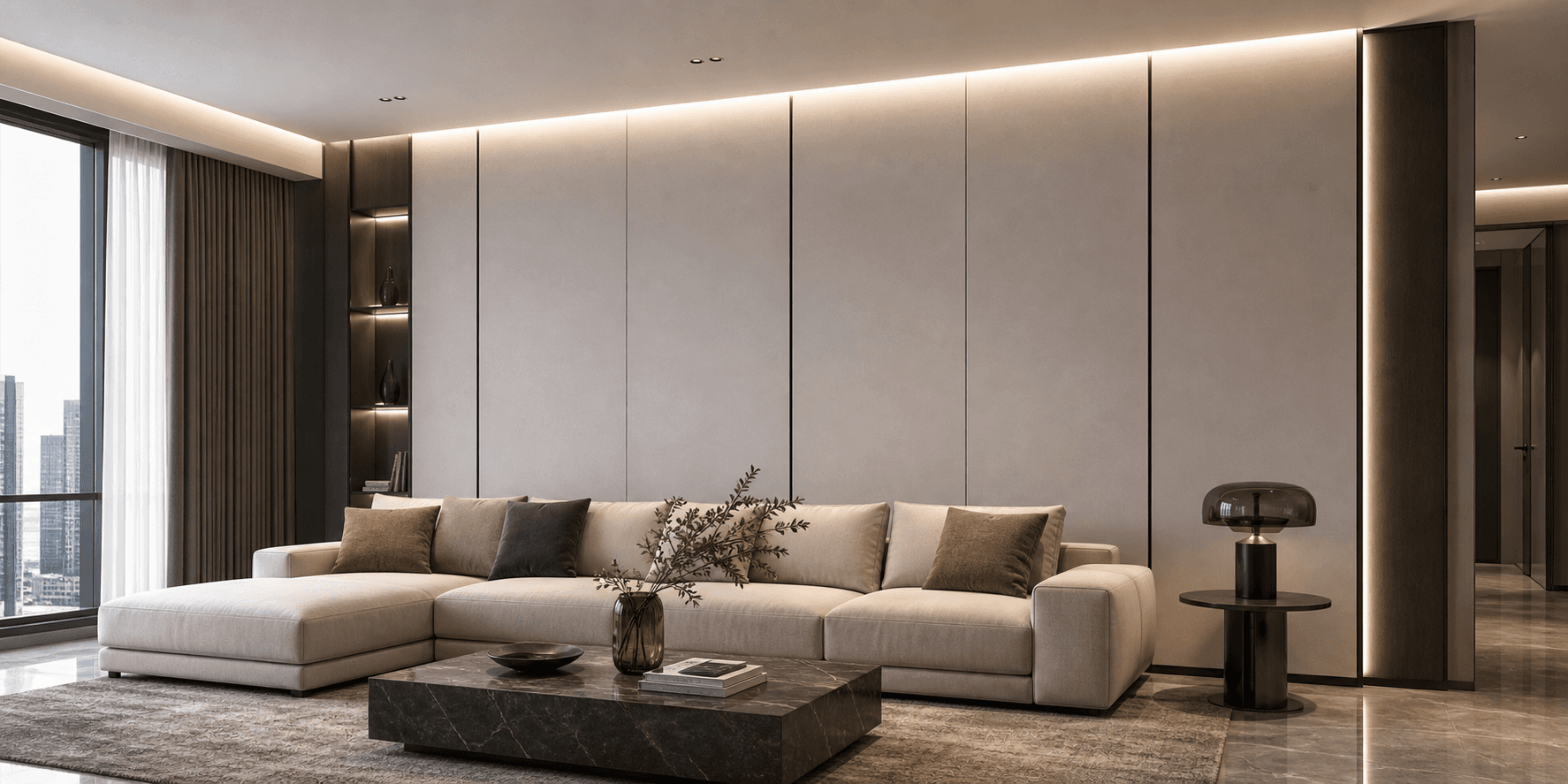
Define the mood before the shape
A common mistake is choosing materials and shapes before defining the intended mood. Villa living rooms, apartments, bedrooms, and entryways each require different scale and expression.
For a premium result, avoid excessive patchwork and busy patterns. Large walls need stable main panels, with focus placed on material, light, and restrained trim.
Residential module logic
For residential feature walls, it helps to understand three common panel widths: 300mm, 600mm, and 1220mm. 1220mm works for main visual areas; 600mm suits side zones and wall divisions; 300mm works for narrow edges, corners, columns, door sides, and rhythm adjustments.
- TV wall: align the TV, cabinetry, and panel seams.
- Matching trims: handle panel edges, corners, door frames, and cabinet transitions.
- Hidden doors: confirm opening, hinges, swing direction, door gaps, and panel seams in advance.
Complex is not equal to premium
Customers often perceive premium quality through comfort, clean details, and faithful delivery. Even rendering-based cases should explain why the effect can be built and what dimensions, colors, and edge details matter.
Further reading: premium feeling comes from restraint and order
Many feature walls look complex but not premium because the elements lack order. Stone texture, wood grain, metal strips, grilles, light strips, and many colors may attract attention quickly, but can become tiring in daily living. A durable premium wall starts with a stable main field and adds restrained layers.
Delivery also needs to avoid concepts that only look good in renderings. Excessive shapes force cuts around trims, sockets, lights, hidden doors, and cabinets. A steadier approach is to make 300mm, 600mm, and 1220mm sizes serve proportion, matching trims serve edges, and lighting serve atmosphere.
Practical judgment: space concepts must answer usage questions
When applying “How to Make a Feature Wall Feel Premium” to a real project, the goal is not to remember one conclusion, but to form a reviewable judgment method that helps clients, designers, and project owners identify risks before deciding from renderings or samples alone.
Space-solution articles should not only say “beautiful.” Living rooms must answer viewing distance, cabinet height, sofa sightline, and wall center. Bedrooms must answer sleeping mood, headboard scale, lights, and sockets. Entryways need first impression, impact awareness, and storage relationships. Hotels and clubs involve traffic, access, fire documents, and maintenance.
To judge whether a rendering can be delivered, check whether dimensions, seams, edges, hidden doors, lighting, cabinetry, and site interfaces have been considered. If any part is missing, a premium concept can become on-site compromise. This is why space solutions need design, detailing, production, and installation to work together.
- Homes should prioritize lasting comfort before decorative highlights.
- Villas should prioritize scale and order before material combinations.
- Commercial spaces should prioritize maintenance and documentation before visual expression.
Work backward from the use scenario
Use “How to Make a Feature Wall Feel Premium” as a project judgment checklist rather than only reading material. Each point should be verified against the actual space, wall dimensions, material matching, and installation conditions.
Space articles should not be judged by one beautiful rendering. Living rooms involve viewing distance, TV cabinetry, sofa position, and reception sightlines. Bedrooms involve sleeping mood, headboard height, wall lights, and sockets. Entryways involve first impression and durability. Hotels and clubs also involve traffic, equipment points, access panels, and maintenance.
The more premium the space, the more proportion, material, lighting, edge details, and construction interfaces should be judged together. A mature concept is not one with many elements, but one where every element has a reason and can be delivered through drawings, material confirmation, and site review.
- Homes need long-term comfort and durability.
- Villas need scale, order, and system consistency.
- Commercial spaces need image quality, durability, and maintenance efficiency.