02 Materials & Performance
What Separates Premium Wall Panels From Ordinary Panels?
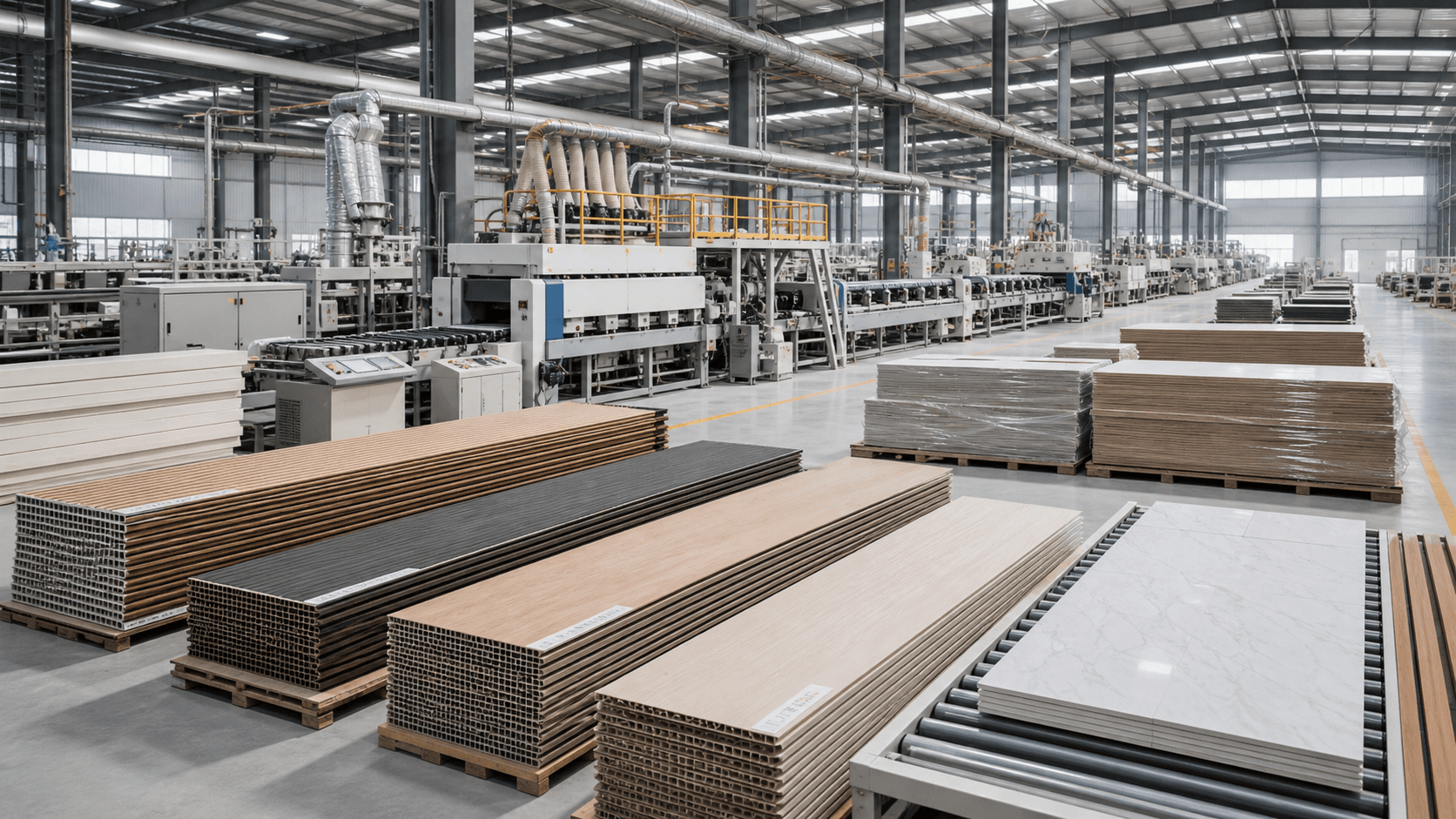
Premium wall panels are not simply more expensive; they offer more stable results, complete matching, controlled details, and better delivery consistency.

Do not judge by one board only
When viewing samples, it is easy to focus on one board’s color and texture. In real spaces, the result depends on large-surface color consistency, seams, trims, edges, door frames, and lighting.
Premium wall panels should be judged as a system: matching trims, hidden-door and door-frame compatibility, 300mm / 600mm / 1220mm seam logic, and detailed review capability.
Four better indicators
Customers can judge from four angles: clear environmental and fire-performance documents, complete matching components, whether renderings can become detailed drawings, and whether dimensions, base wall, and edges are reviewed before installation.
- Material performance: environmental, fire, and stability references.
- Matching capability: panels, trims, frames, and hidden doors.
- Delivery capability: rendering, detailed drawing, and installation review.
Premium feeling lands in details
Whether a wall feels premium often depends on natural door gaps, matching trims, clean corners, and a flat surface under lighting. The real value is controlled detail, not unnecessary complexity.
Further reading: premium difference is controllability
Ordinary panels often stay at material display: attractive color, rich texture, reasonable price. Premium panels need more: matching trims, hidden-door coordination, detailed dimensions, batch stability, and pre-installation review.
If customers compare only unit price, they may ignore later trims, rework, color differences, and communication cost. Real premium quality is not spending everything on complex shapes, but making each node controllable and narrowing the gap between rendering and finished result.
Practical judgment: performance needs scenarios and boundaries
When applying “What Separates Premium Wall Panels From Ordinary Panels?” to a real project, the goal is not to remember one conclusion, but to form a reviewable judgment method that helps clients, designers, and project owners identify risks before deciding from renderings or samples alone.
Material performance is not made professional by piling up terms. It should answer specific risks. Environmental performance relates to long-term living and indoor concerns; flame retardancy relates to project documents and commercial acceptance; stability must return to base wall, humidity, sunlight, installation, and maintenance.
Performance wording should be restrained. Certificates and reports can be presented with their usage direction, but they should not become absolute promises. Responsible education explains what reports prove, what they do not replace, and why final judgment still depends on design, construction standards, and site conditions.
- Environmental claims should be read by test object and indoor usage scenario.
- Flame-retardant claims should be read by project type, document needs, and acceptance boundaries.
- Stability should be judged by material structure, base wall, and installation nodes.
How to read performance content
Use “What Separates Premium Wall Panels From Ordinary Panels?” as a project judgment checklist rather than only reading material. Each point should be verified against the actual space, wall dimensions, material matching, and installation conditions.
Environmental performance, flame retardancy, and stability should not be treated as simple slogans. A professional reading method is to understand which risk each item addresses, what was tested, where it applies, and what its boundaries are.
Certificates can build trust, but they do not replace site conditions, installation craft, or maintenance. Performance should be judged together with reports, material structure, surface finish, usage frequency, and space environment.
- Homes focus on environmental performance, odor, stability, and long-term use.
- Projects focus on flame retardancy, durability, batch stability, and maintenance.
- Reports should be read by tested object and scope, without overstating claims.